AI in Sports Betting and Basketball: How Machine Learning Shapes EuroLeague Markets
 Available in US
The Sportradar press release caught my attention: AI-flagged suspicious matches increased 56% year-over-year in 2025. That statistic reveals something profound about where basketball betting is heading. Artificial intelligence is not a future speculation – it is actively reshaping how bookmakers set odds, how integrity monitors detect manipulation, and ultimately how much edge remains available to human bettors. Understanding this transformation helps you navigate markets that are becoming simultaneously more efficient and more complex.
AI’s integration into EuroLeague betting operates on multiple levels that affect bettors differently. From integrity monitoring that protects competition authenticity to pricing algorithms that shrink inefficiencies, machine learning is transforming the landscape. This guide examines where AI currently shapes basketball betting and what these developments mean for your approach.
AI in Match Integrity Monitoring
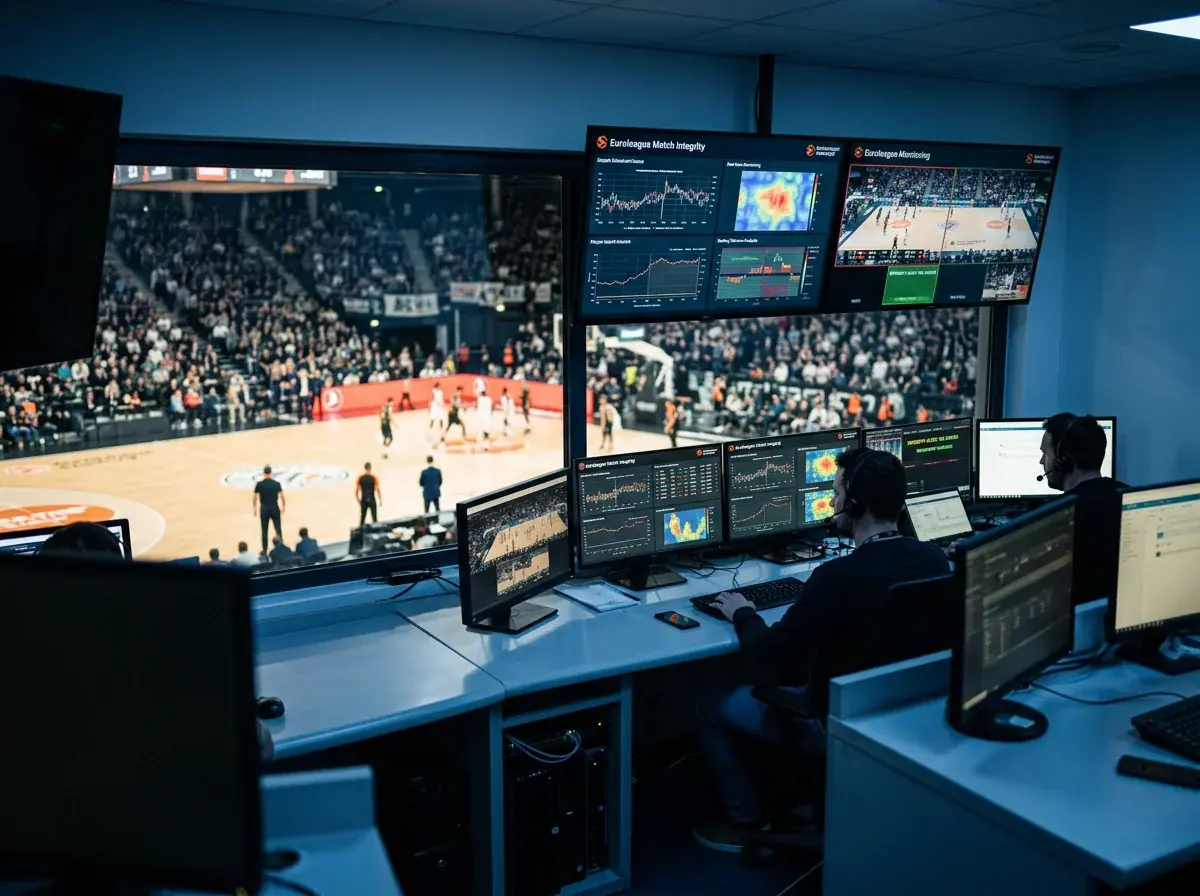
Sportradar’s Universal Fraud Detection System (UFDS) represents the most visible AI application in basketball betting infrastructure. The system analyses betting patterns across global markets in real-time, identifying anomalies that suggest potential manipulation faster than human analysts could detect.
The 56% increase in AI-flagged suspicious matches reflects improved detection capability rather than increased manipulation. As AI systems learn from historical patterns, they identify subtle irregularities that earlier detection methods missed. This enhanced capability creates better-protected markets for legitimate bettors.
Sportradar supported 125 sports sanctions across seven sports based on intelligence from their monitoring systems. This enforcement demonstrates that AI detection has real consequences – identified manipulation leads to investigation and punishment. The deterrent effect helps maintain the legitimate market conditions that profitable betting requires.
Matthew Wein, a security expert, offers measured assessment: “I would caution that this is very much a cat-and-mouse game. The bad guys find an edge and then the good guys catch up.” AI detection represents the current “good guy” advantage, but sophistication on both sides will continue evolving.
AI and Bookmaker Odds Calculation
Modern bookmaker pricing increasingly relies on machine learning models that ingest vast data streams and output odds with minimal human intervention. These systems process historical results, real-time statistics, injury news, and betting patterns to generate prices that traditional analyst teams could not match in speed or consistency.
The efficiency these systems create reduces available edge for human bettors. Where manual odds-setting left gaps that knowledgeable bettors could exploit, algorithmic pricing closes those gaps faster. The inefficiencies that remain tend to be subtler and shorter-lived than in previous eras.
However, AI pricing systems have limitations that create opportunity. Algorithms trained on historical patterns may misprice novel situations – new teams, unusual scheduling, unprecedented player movement. These edge cases resist algorithmic prediction precisely because they lack the historical data that machine learning requires.
Live betting particularly depends on AI capability. The speed required to adjust odds during games exceeds human capacity; algorithms must price thousands of market changes per game. The sophistication of these live pricing systems varies across operators, creating potential differences in live market efficiency.
AI Tools Available to Bettors
Bettor-facing AI tools range from simple prediction models to sophisticated analytical platforms. Some services claim AI-generated picks; others provide data processing capabilities that help bettors build their own models. The quality and genuine utility vary enormously.
Skepticism toward AI prediction services is warranted. If a model genuinely predicted basketball outcomes with sufficient accuracy to guarantee profit, the operators would bet it themselves rather than selling access. Services that promise AI-powered certainty typically overpromise relative to actual delivery.
Data processing AI offers more genuine utility than prediction AI. Tools that aggregate statistics, identify patterns, and surface relevant information faster than manual research can enhance human analysis without claiming to replace it. These assistive applications suit bettors who maintain analytical ownership while seeking efficiency gains.
Building personal models using machine learning techniques has become more accessible. Open-source tools and educational resources let motivated bettors develop proprietary systems. The learning curve is substantial, but the potential to create genuine edge through personalised AI application exists for those willing to invest.
Future of AI in Basketball Betting
Continued efficiency improvement seems inevitable as AI pricing systems absorb more data and refine their algorithms. Markets that currently offer edge may become tighter as algorithmic competition intensifies. Bettors should expect that what works today may not work tomorrow as AI evolves.
Information advantages may shift toward those with unique data access. Public data feeds into everyone’s models equally; proprietary information sources become more valuable as algorithmic parity reduces other edges. Relationships that provide early access to news or unique analytical perspectives gain relative importance.
Human judgment retains value in areas AI handles poorly. Motivation assessment, locker room dynamics, coaching psychology, and other soft factors resist quantification that algorithms require. Bettors who excel at qualitative analysis may find this edge more durable than purely statistical approaches.
Regulatory responses to AI in gambling remain uncertain. How authorities will address AI-assisted betting – whether by operators or bettors – could reshape market structures in unpredictable ways. Staying informed about regulatory developments protects against sudden environmental changes.
Frequently Asked Questions
How do bookmakers use AI to set EuroLeague odds?
Bookmakers employ machine learning systems that process historical data, real-time statistics, injury news, and betting patterns to generate and adjust odds automatically. These systems price markets faster and more consistently than human analysts, though they may struggle with novel situations lacking historical precedent.
Can AI help me identify value bets in EuroLeague?
AI tools can assist with data processing and pattern identification that enhance human analysis. However, services claiming AI can guarantee profitable predictions should be approached skeptically. Genuine value identification still requires human judgment about factors that resist algorithmic quantification.
Navigating AI-Enhanced Markets
Acknowledge that you are competing against sophisticated AI systems when betting EuroLeague. This does not make profitable betting impossible, but it demands recognition of what you are actually up against. Casual approaches that sufficed in less efficient markets may fail against algorithmic competition.
Focus edge-seeking where AI is weakest. Novel situations, qualitative factors, and information advantages that algorithms cannot easily incorporate offer more sustainable opportunity than purely statistical analysis where AI excels.
Consider AI tools as analytical assistants rather than decision-makers. Data processing, pattern surfacing, and efficiency enhancement support human judgment; prediction replacement typically disappoints. Maintain analytical ownership while accepting computational assistance.
The 56% increase in AI-flagged suspicious matches demonstrates both AI capability and the ongoing integrity effort that protects legitimate betting. Markets that remain clean and efficient serve bettors who succeed through genuine analysis rather than information asymmetry or manipulation access. In this sense, AI’s role in maintaining market integrity benefits all participants who approach EuroLeague betting legitimately.
Written by the editors at Euroleague Basketball Betting.