EuroLeague Player Props Betting: Individual Markets for UK Punters
 Available in US
Three seasons ago, I noticed something peculiar about a certain Barcelona point guard. His scoring line was consistently set at 14.5 points, yet his PIR – the Performance Index Rating that EuroLeague uses to measure overall impact – told a different story. He was averaging 18+ PIR through assists and rebounds that the market was not pricing into his points prop. That disconnect became one of my most profitable angles for six months until the books finally adjusted.
Player props in EuroLeague basketball represent one of the last frontiers where informed bettors can find consistent edges. While moneyline and totals markets attract sharp action that quickly eliminates inefficiencies, individual player markets often remain soft because they demand specific knowledge that most bettors do not possess. If you understand how European basketball values different contributions and how to interpret the metrics that matter, you can exploit gaps that persist throughout the season.
Types of Player Props in EuroLeague
Points props dominate the EuroLeague player markets, appearing for virtually every starter and key rotation player. The standard format mirrors what you see in NBA betting: a line set at half-point increments with roughly even odds on each side. Where things get interesting is the secondary stat props – assists, rebounds, three-pointers made – that receive far less attention from casual bettors.
Assists props in EuroLeague carry unique characteristics because European basketball emphasises ball movement differently than American hoops. A point guard who might average 7 assists in the NBA often posts 5-6 in EuroLeague because systems distribute playmaking responsibility more evenly. Understanding a team’s offensive philosophy tells you whether the primary ball-handler will rack up assists or whether secondary creators will absorb that production.
Rebounds props require attention to both opportunity and competition. A centre playing against a smaller lineup might see inflated rebounding numbers not because he is performing exceptionally but because opponents simply cannot contest his positioning. Matchup analysis matters more for rebounds than any other prop category – the same player might post 8 rebounds against one opponent and 4 against another based purely on stylistic factors.
Combined stat props – points plus rebounds, points plus assists, or points plus rebounds plus assists – offer flexibility that single-stat props cannot match. These markets let you capitalise on overall performance expectations without needing precision about how a player will contribute. A versatile forward who might score 12 or 18 depending on defensive attention can still reliably hit a combined line if his floor in other categories provides cushion.
Three-pointers made props deserve special attention in EuroLeague because shooting variance is more pronounced in European basketball. The shorter three-point line theoretically increases accuracy, but defensive schemes designed to contest perimeter shots create significant game-to-game fluctuation. Betting threes made requires understanding not just a player’s volume and percentage but how opponents typically defend shooters of his type.
Using PIR Data for Player Prop Analysis
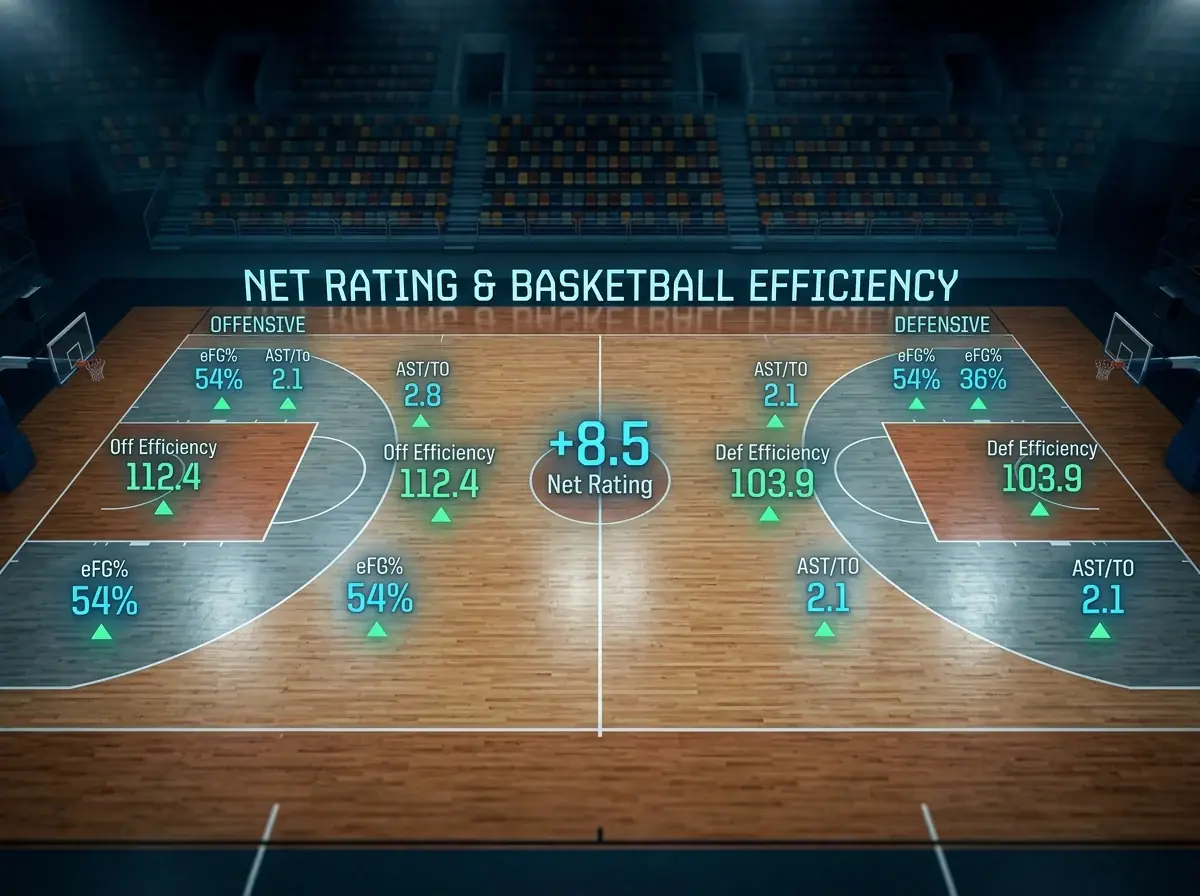
PIR – Performance Index Rating – is the official efficiency metric of EuroLeague basketball, and understanding it transforms how you approach player props. The formula aggregates positive contributions like points, rebounds, assists, steals, and blocks while subtracting negative events like missed shots and turnovers. A player averaging 15+ PIR per game is performing at an excellent level; anything above 20 enters All-EuroLeague territory, and 25+ marks MVP-calibre production.
The brilliance of PIR for prop betting lies in its predictive stability. Individual stats fluctuate wildly from game to game – a scorer might post 22 points one night and 8 the next – but PIR tends to cluster more tightly around a player’s true talent level. When I analyse prop lines, I first check whether the implied points total aligns with the player’s average PIR contribution. A mismatch suggests the book has priced the prop based on box score numbers without understanding underlying performance consistency.
Breaking down PIR by component reveals which props offer the best value for specific players. A guard whose PIR comes primarily from scoring and assists presents different opportunities than one who generates value through steals and low turnover rates. The first player’s props might be accurately priced on primary stats but undervalued on combined markets. The second might offer value on defensive prop markets that casual bettors ignore entirely.
PIR trends across a season tell you when players are playing above or below their sustainable level. A forward posting 18 PIR through the first ten games after averaging 12 the previous season is likely to regress – and his props, set based on recent production, will be inflated. Conversely, a player returning from injury whose PIR is suppressed presents buy-low opportunities before the market recognises his return to form.
Home and away PIR splits often diverge more dramatically than overall scoring averages. Some players thrive in hostile environments; others struggle. Checking these splits before betting props on road games can identify players whose travel performance differs substantially from their season averages.
Player Props Availability at UK Bookmakers
The 2025-26 season brought EuroLeague expansion to 20 teams and 38 regular season games per club, fundamentally increasing the volume of player prop opportunities available to UK bettors. More games mean more markets, and bookmakers have responded by deepening their prop offerings to capture action from an increasingly sophisticated betting public.
Coverage varies significantly across UKGC-licensed operators. Major bookmakers typically offer points props for 8-12 players per game, usually covering all starters plus key bench contributors. Assists and rebounds props are less consistently available – you might find them for star players but not for role players who occasionally produce in those categories. Three-pointers made props appear sporadically, often only for recognised shooters rather than secondary options who might present better value.
Timing matters for prop availability. Markets typically open 24-48 hours before tip-off, with the deepest selection appearing within 12 hours of game time. If you are targeting specific props, checking multiple books in the hours before a game often reveals options that were not available earlier. Some operators add props throughout the day as they assess demand and liability.
Comparing prop lines across bookmakers is essential because pricing varies more dramatically than for main markets. I have seen the same player’s points line set at 15.5 at one book and 17.5 at another – a gap that would be unthinkable for a spread or total. Shopping for the best number on props can add significant expected value to your betting, sometimes turning a marginal play into a clearly positive one.
Betting exchanges offer an alternative for props, though liquidity remains thin for EuroLeague compared to NBA markets. When you can find matched action, exchange props often provide better effective odds by eliminating the traditional bookmaker margin. The tradeoff is availability – you cannot count on finding your desired prop with sufficient liquidity to place a meaningful stake.
Strategies for EuroLeague Player Props
Matchup analysis separates profitable prop bettors from those who simply chase names and numbers. Before betting any prop, I identify how the opponent defends players in that role. Does their centre protect the rim aggressively, limiting driving lanes? Do their guards switch screens, creating mismatches that ball-handlers can exploit? Does their defensive scheme funnel action toward specific helpers? These questions matter more than a player’s season average.
Usage rate in the absence of teammates creates some of the clearest prop edges. When a team’s primary scorer sits with injury, secondary options see dramatic increases in shot attempts and overall involvement. The market adjusts for these absences but often underestimates the magnitude of the change. A player moving from 12 shots per game to 18 might see his points line move from 13.5 to 16.5 when it should probably be closer to 19.5.
Foul trouble considerations rarely appear in prop pricing but significantly impact outcomes. A starter who picks up two early fouls might play only 20 minutes instead of his usual 28, depressing all his counting stats. Conversely, a backup benefits from unexpected minutes when starters face foul issues. Tracking referee tendencies and player foul rates adds a predictive layer that most bettors ignore.
Pace-adjusted thinking applies to props just as it does to totals. A player averaging 15 points per game in a slow-paced system might post 18-20 against a team that pushes tempo and creates additional possessions. His raw average understates his performance in fast-paced contexts. Similarly, defensive teams that grind pace depress opponent stats across the board, making unders attractive on players facing suffocating defences.
Correlated props offer a sophisticated approach when you have a strong read on a game’s likely script. If you expect a blowout, unders on the favourite’s starters become attractive because they will sit early in the fourth quarter. If you anticipate a close, high-scoring game, overs on primary scorers from both teams gain appeal because late-game situations concentrate shots in star players’ hands.
Frequently Asked Questions
Which EuroLeague player prop markets are most commonly available?
Points props appear most consistently, covering starters and key rotation players for virtually every game. Assists and rebounds props are available for star players but less reliably for role players. Three-pointers made and combined stat props appear sporadically depending on the bookmaker and specific matchup.
How deep are player prop markets compared to NBA at UK bookmakers?
EuroLeague prop markets remain significantly shallower than NBA offerings. Where NBA games might feature props for 15+ players across multiple stat categories, EuroLeague games typically offer props for 8-12 players with more limited stat variety. This reduced depth actually creates opportunities because less competition means softer lines.
Making Player Props Part of Your Betting
Player props should not replace your core EuroLeague betting strategy but rather complement it. The edges available in prop markets often appear independently of your views on game outcomes – you might love a team to win but still identify value on an opponent’s player prop based on matchup dynamics. This independence lets you diversify your action across correlated and uncorrelated bets.
Start with PIR analysis as your foundation. Understanding how a player generates value – and whether the market correctly prices that value into specific prop categories – gives you an analytical framework that most bettors lack. Build from there by adding matchup specifics, usage adjustments, and situational factors that refine your projections beyond simple season averages.
Track your prop results separately from other bet types. You might discover that you excel at rebounds props but struggle with assists, or that your edge exists specifically in home games where you have better information about rotation patterns. Specialisation within the prop market mirrors the broader principle that focused expertise beats scattered generalisation.
The expansion to 20 teams in 2025-26 means more games, more players, and more opportunities. But it also means more homework – you cannot maintain edge across every player on every roster. Choose your spots carefully, bet with discipline, and let the mathematics of positive expected value accumulate over the long season ahead.
Prepared by the Euroleague Basketball Betting editorial staff.